
You don’t need a fancy bookshelf, a big budget, or a perfectly organized home to help your child grow up with books. You can start with six books and an ordinary box. Seriously.
Let’s talk about building a home where reading belongs, even when life is busy, money is tight, and the laundry pile has come to life.
1. Start with six books in a box.
A home library doesn’t have to be an entire room. It doesn’t even have to be a bookshelf. Find six books your child enjoys. Put them in a box, basket, or a spot on a low shelf where your child can reach them. That’s it. You’ve started a home library.
Choose books your child wants to look at again and again. Familiar favorites count. So do picture books, animal books, silly stories, and books with very few words.
You don’t need to impress anybody with your collection. The goal is to make books part of your child’s everyday world.
2. Let your child choose the story.
You might love a particular book. Your child might love the one about the dog who makes a mess. Guess which one gets read 47 times?
Let children have a say in what they read. Give them choices, let them return to old favorites, and don’t worry if they seem to be stuck on one book for a while.
Repeated reading helps children become familiar with words, recognize patterns, and understand how stories work. And enjoying a book is a pretty good reason to read it again.
3. Read for ten minutes. Or five. Just read.
Use the books. You don’t need to schedule a 30-minute reading session every evening. Read one short book before bed. Look at pictures together while breakfast is cooking. Read a few pages while waiting for an appointment.
Five minutes is a perfectly reasonable place to start. If your child wants more, wonderful. If not, you’ve still shared a book.
Regular little moments can become a reading routine without turning family life into another item on the to-do list.
4. Talk about the pictures.
Reading together doesn’t always mean reading. Point to a picture and ask, “What do you think that dog is doing?” Talk about the colors, the characters, or something that reminds you of your own family.
You can make up a story about a picture, too. Your child might even take over and tell you what happens next.
These conversations help children connect words, ideas, and experiences. They also remind children that books are things we can explore together, not just pages we have to get through.
5. Tell stories when you don’t have a book.
Sometimes, don’t use the books. Here’s a little secret from a storyteller: you don’t need a printed book to tell a story.
Tell your child about something funny that happened when you were young. Make up a story about a lost shoe or a very confused cat. Ask your child to tell you what happened during their day.
Songs, rhymes, conversations, and family stories all give children opportunities to play with language and learn how stories work.
Books are wonderful. They’re not the only way families share stories.
6. Buy a book, borrow a book, share a book.
Buying books for your children is a good thing. A book they own can become an old friend, ready to be opened at bedtime, on a rainy afternoon, or for the hundredth reading of a favorite story.
You don’t have to buy a stack of brand-new books every month, though. Building a home library can fit different family budgets. Here are some ways to get books into your home.
Buy books. Visit a local indie bookstore, shop at a book fair, or purchase books directly from a publisher. Birthday gifts and holiday presents are great opportunities to add to a child’s collection. Choose books your child enjoys and will want to revisit.
Visit your public library. Borrow books to explore new subjects, authors, and stories without buying every title. Your local library can also help you discover what your child enjoys before you decide which books to buy.
Look for secondhand books. Used bookstores, yard sales, thrift stores, and library book sales can be wonderful places to find affordable additions to your collection.
Swap with other families. Trade books with friends or accept hand-me-downs from children who have outgrown their favorites. One family’s finished favorite might become another child’s new discovery.
Explore free book programs. Some community organizations and literacy programs provide books for children to keep. Look for programs available in your community.
There isn’t one right way to build a home library. You can mix new books, used books, borrowed books, and treasured hand-me-downs.
What matters is giving children opportunities to spend time with books and discover stories they want to revisit. And when you buy a book, you’re not just filling a shelf. You’re giving a child something to return to, again and again.
7. Make reading an invitation, not a test.
Your library shouldn’t be a demand center for your child. Let them use it at their own pace. You don’t have to quiz your child after every story. You don’t have to turn every book into a lesson.
Enjoy the time together when you do share books. Be curious. Laugh at the silly parts. Let your child ask questions, interrupt with observations, or simply listen.
Children develop literacy at different rates, and families have different resources, schedules, and circumstances. You don’t need to copy someone else’s routine to make reading part of your home.
Start where you are.
Does having books at home really make a difference?
Yes, and researchers have been studying this question for years.
A 2026 study in the Proceedings of the National Academy of Sciences looked at a five-year program that gave children’s books to students in high-poverty elementary schools in Milwaukee, Wisconsin. 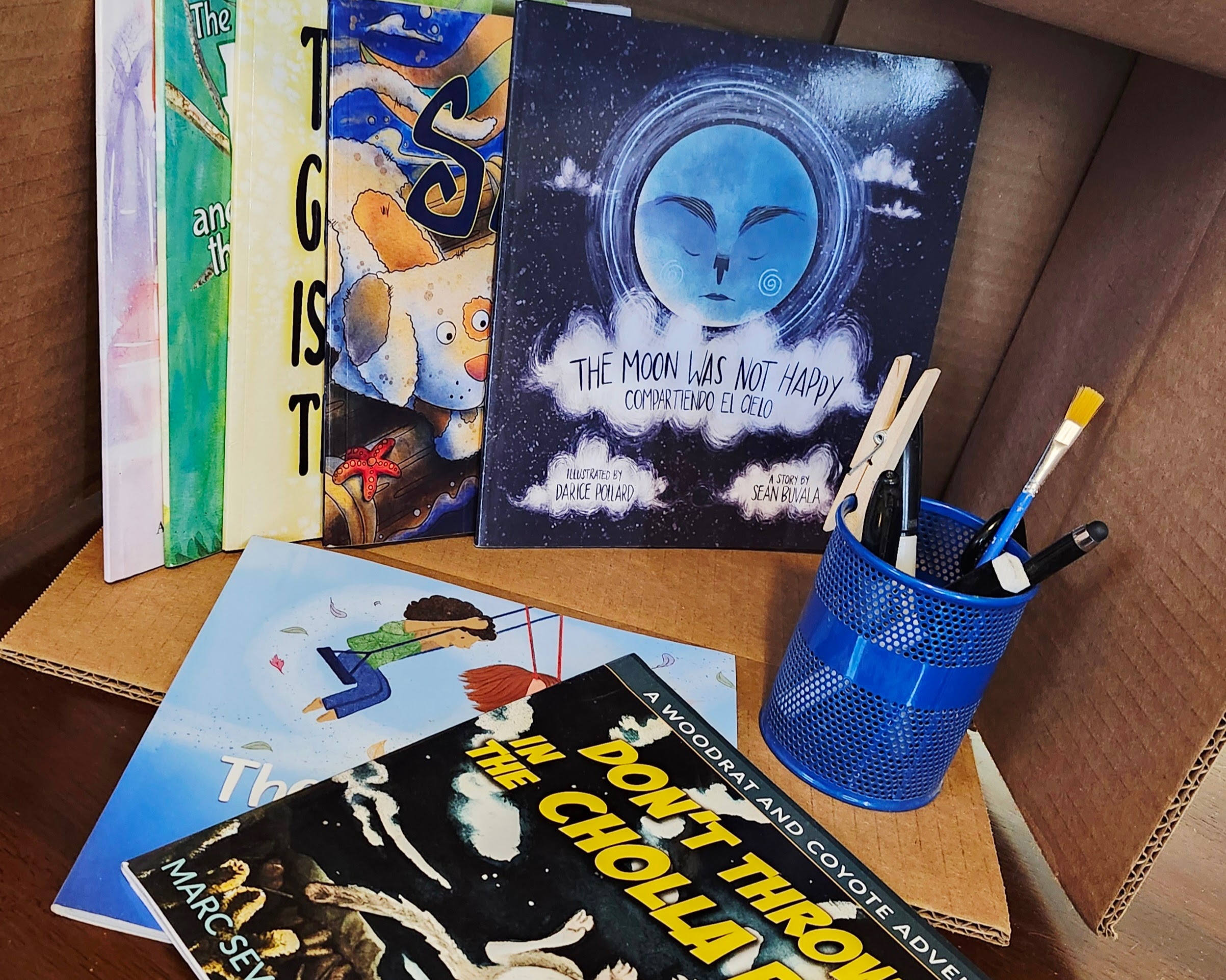
Students in participating schools received repeated distributions of free books to build their home libraries. Researchers found that students who were offered the program scored higher on reading assessments than students in schools that did not receive the books during the study. Students who experienced the full five-year program showed larger gains.
Regular access to books can contribute to children’s reading achievement, even without an intensive teaching program tied to the book distributions, the researchers found.
This doesn’t mean that six books in a box will guarantee better grades. It does reinforce an encouraging idea: giving children access to books is a practical way to support their literacy development.
Read the research: Cumulative Access to Print Books Improves Literacy Achievement: Evidence from a Five-Year Randomized Trial in High-Poverty Schools
Your home library can start today.
Six books in a box. Five minutes together. A story told while dinner cooks.
These may seem like small things. Small things are often how lasting family habits begin.
You don’t need to create a perfect reading environment. You don’t need to spend a fortune. And you don’t need to wait until life gets less busy.
Find a box. Pick six books. Put them somewhere your child can reach.
Congratulations. You’ve got a home library. And you can build from there.